
Blog · Regulations
Hi-vis requirements on Norwegian construction sites in 2026
EN ISO 20471 sets the visibility class on site. Here is what the classes mean, and what they mean if you work on site.
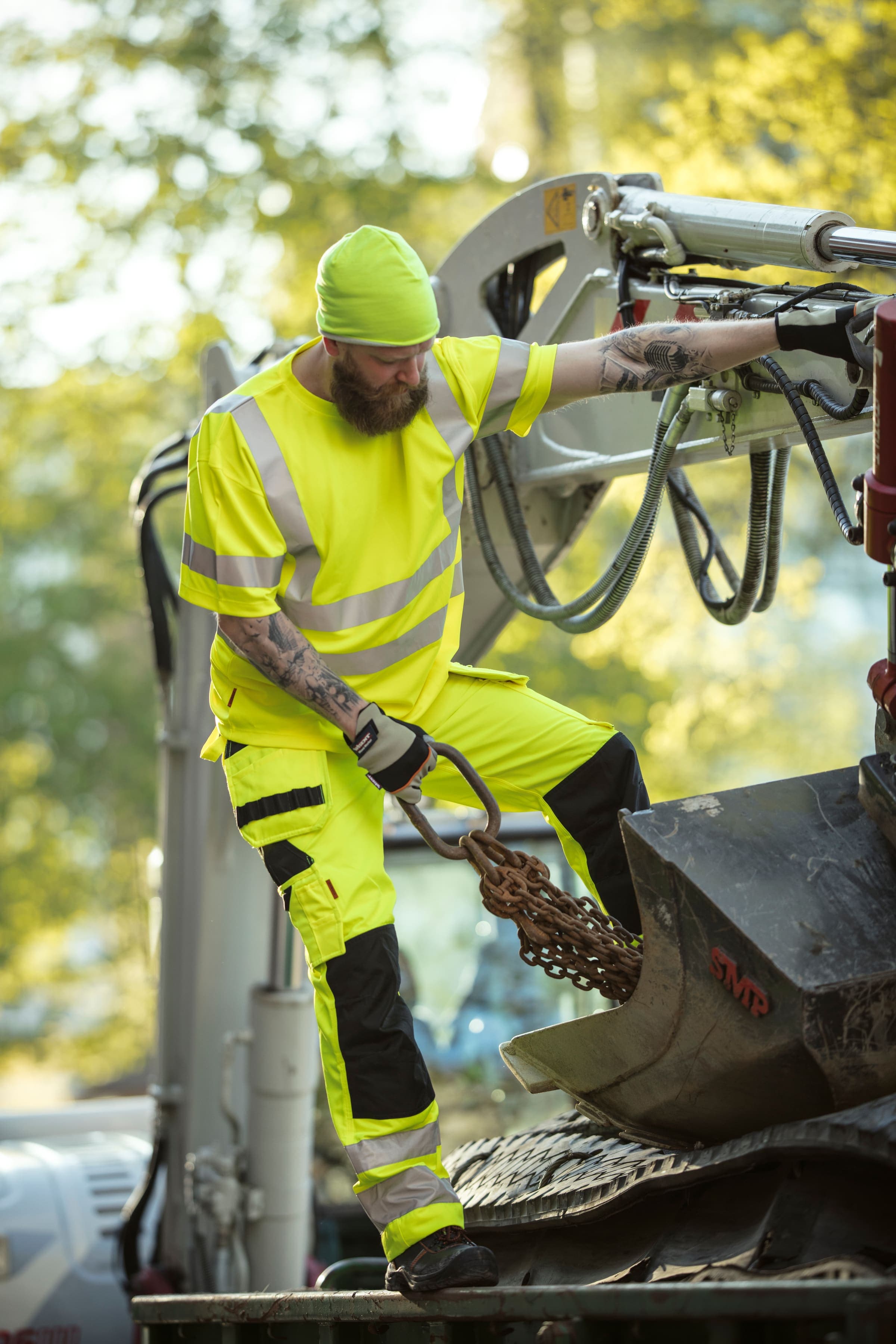
On Norwegian construction sites, high-visibility clothing is governed by EN ISO 20471. Class 2 is the minimum for most construction activities, while Class 3 is used where the risk assessment or the client requires it, typically in trafficked areas and near vehicles and machinery. The class is determined by the total amount of fluorescent and reflective material, and reflective tape must be at least 50 mm wide and visible all the way around.
Every year there are serious accidents in which poor visibility is a contributing factor. Here is what you need to know about the requirements for high-visibility clothing on site.
EN ISO 20471 is the European standard for high-visibility clothing. It divides garments into three classes based on the amount of fluorescent background material and retroreflective material. Class 1 offers the least visibility and is approved only for low risk. Class 2 is the minimum for most construction activities. Class 3 offers the highest visibility and is required for work near vehicles and machinery.
Which class you need follows from the risk assessment. Class 3 is used where there is traffic or heavy machinery on the move, such as loading, unloading and moving materials. The client can also set stricter requirements than the standard alone.
It is worth noting that the class is determined by the total amount of fluorescent and reflective material that is visible. A Class 2 jacket combined with Class 1 trousers does not automatically add up to Class 3, it is the combined surface area that counts. Several manufacturers have therefore launched complete outfits designed to reach Class 3 when worn together.
The colour requirements are specific: fluorescent yellow, orange or red are the only approved background colours. Of these, yellow is by far the most common in Norway. Reflective tape must be at least 50 mm wide and positioned horizontally around the torso and vertically over the shoulders to ensure visibility from every angle. The tape must be visible through a full 360 degrees.
A common problem is that reflective tape loses its effectiveness over time. Industrial washing at high temperatures, mechanical wear and UV exposure gradually break down the retroreflective material. Employers should have routines for regular inspection of reflective tape and replace garments where it is visibly degraded. A simple test is to shine a torch on the tape in a dark room, weakened reflectivity is obvious.
Branding hi-vis workwear comes with its own rules. On high-visibility clothing, the logo must not cover the fluorescent fabric or the reflective tape beyond what the standard and the manufacturer allow. In practice this means the chest logo is kept within a limited area. Embroidery works well on hi-vis, on the dark panels and where the manufacturer allows it. On the fluorescent fabric we use print. A logo can affect whether the garment still meets the standard. That is why we assess placement and branding method against the manufacturer’s documentation before anything goes into production.
Employers are responsible for ensuring that staff have access to approved protective clothing and that it is worn correctly. Breaching the requirements can lead to orders and fines from the Labour Inspection Authority, and in the worst case personal liability in the event of an accident. Choose approved garments and keep good routines for maintenance and replacement.