
Blog · Regulations
Am I entitled to workwear from my employer?
As an employee, are you entitled to workwear from your employer? We explain the difference between protective equipment and ordinary workwear, what Norwegian law says, and what actually happens in practice.

You have a statutory right to personal protective equipment and necessary protective clothing free of charge from your employer when the work involves risk, under the Working Environment Act and the related regulation. Ordinary workwear with no protective function is not required by law, but is often governed by a collective agreement, your employment contract or company policy. The line between protective equipment and branded workwear decides who pays.
The question of who is entitled to workwear comes up in almost every industry, from construction and manufacturing to healthcare and service. The answer hinges on one key distinction: is the garment protective equipment that guards against a specific risk, or is it ordinary workwear and branding? The two categories are treated differently in law. This article walks through what actually applies.
What does Norwegian law say about workwear?
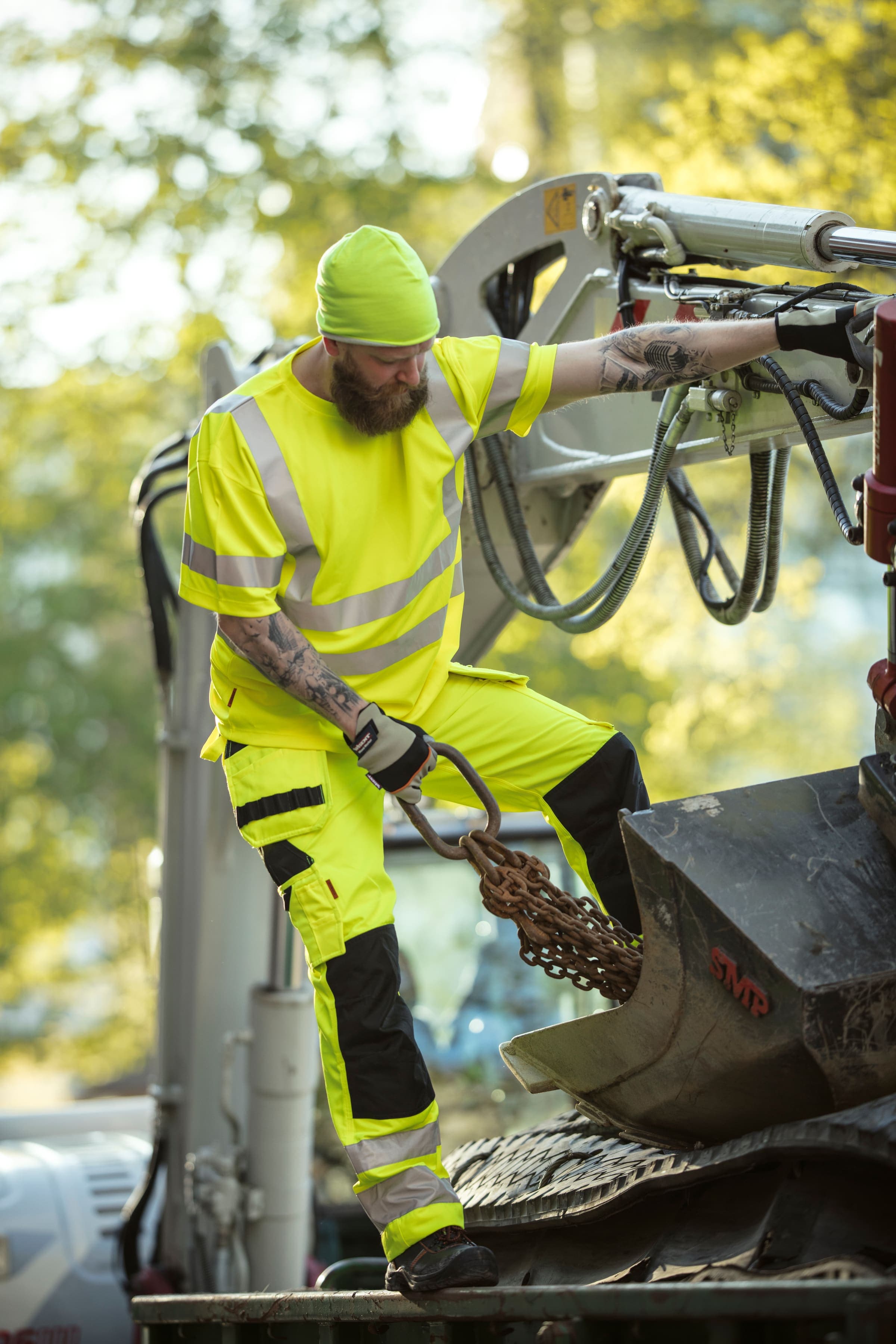
The Working Environment Act requires the employer to ensure a fully sound working environment. When a risk assessment shows that the work poses a danger to life or health, the employer must provide the necessary personal protective equipment at no cost to the employee. This follows from the regulation on organisation, management and participation. Protective equipment includes safety boots, helmets, hearing protection, safety glasses, gloves and protective clothing such as flame-retardant or high-visibility workwear.
Does the employer have to pay for protective equipment?
Yes. Personal protective equipment needed to carry out the work safely must always be paid for by the employer. The employer is also responsible for maintenance, inspection and replacement when the equipment is worn or damaged. The Norwegian Labour Inspection Authority is clear that the employee should not bear the cost of protective equipment the work requires. This applies whether the worker is permanent, temporary or hired in.
Am I entitled to ordinary workwear with no protective function?
Here the picture is more nuanced. Branded workwear such as a logo T-shirt, a polo shirt or trousers with no protective function is not mandated by law in the same way. Many companies still choose to cover it because it strengthens the brand and creates a professional impression. Whether you are entitled to such workwear then depends on a collective agreement, your individual contract or company policy. Several agreements stipulate that the employer covers a set number of garments per year.
Protective equipment or ordinary workwear: an overview
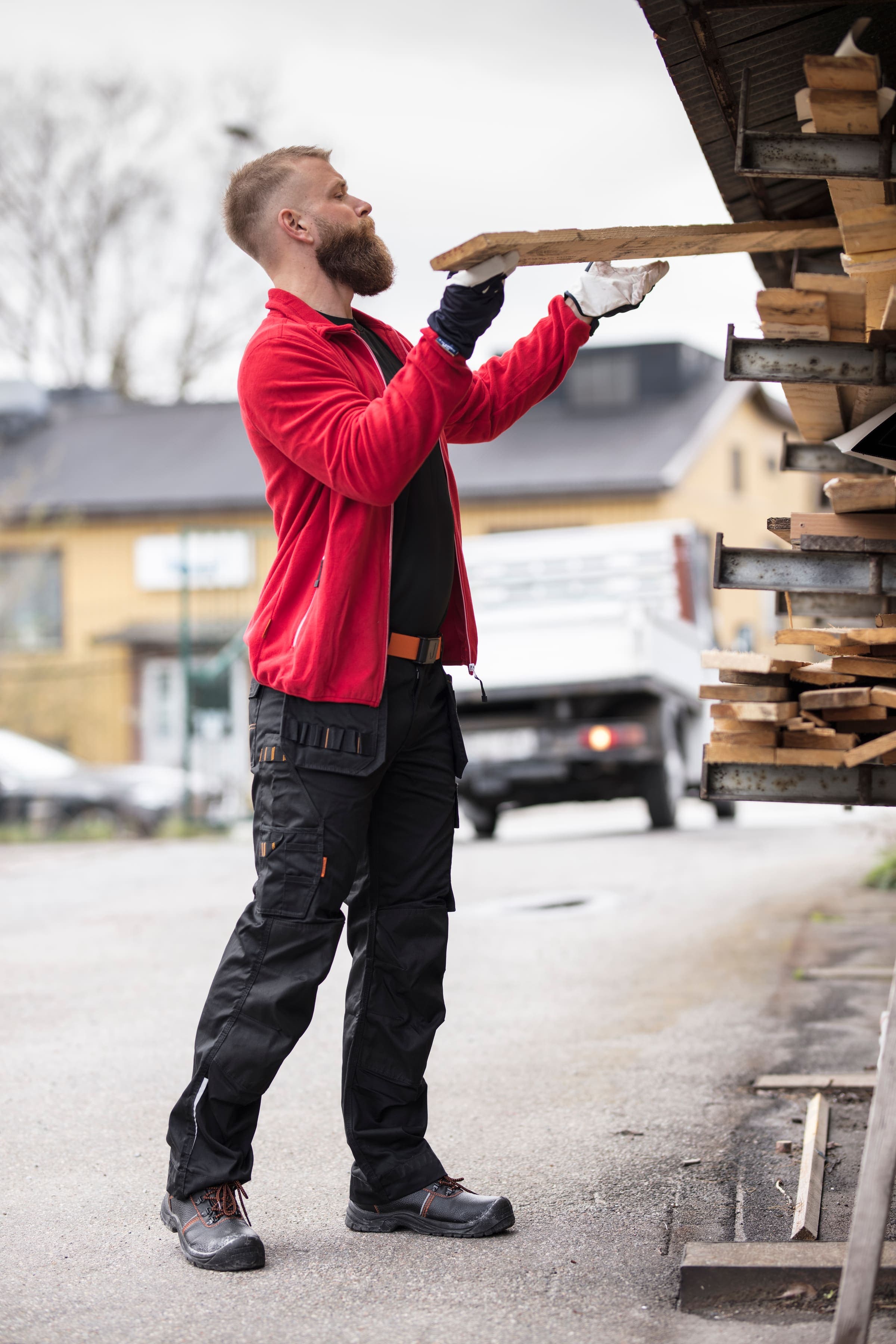
To make the distinction concrete, use this overview. Flame-retardant clothing, high-visibility clothing in Class 2 or 3, safety boots and helmets: this is protective equipment the employer must always pay for. A branded T-shirt, polo shirt, sweater and trousers with no protective function: this is ordinary workwear governed by agreement or policy, not directly by law. A garment can also be both at once, for example a high-visibility jacket with a company logo, in which case the protection requirement applies to the garment itself.
What about cleaning and maintenance of workwear?
For protective equipment the employer is responsible for keeping it in sound condition, which in practice means washing and maintenance are covered or organised by the employer. This matters especially for flame-retardant and high-visibility clothing, where incorrect washing can weaken the protection. For ordinary branded workwear, practice varies, and many companies solve it with a subscription arrangement that includes washing.
Our advice to employers is to keep a clear, written workwear policy that separates statutory protective equipment from branded workwear. It gives employees predictability and reduces disputes. A good policy describes which garments the employee receives, how often they are replaced, and how washing and return are handled.
At Universe Profile we help companies set up complete clothing programmes covering both certified protective equipment and branded workwear. A logo can affect whether the garment still meets the standard. That is why we assess placement and branding method against the manufacturer’s documentation before anything goes into production. We also advise on the standards that apply to your industry. Use the Design Studio to see how your logo looks on relevant garments, or ask for a no-obligation quote and we will put together a solution tailored to your needs.